
How to tell real extra virgin olive oil
A label does not tell you everything, but it tells you a lot. With your nose and your palate, you already have all you need to judge an oil.
· 5 min read
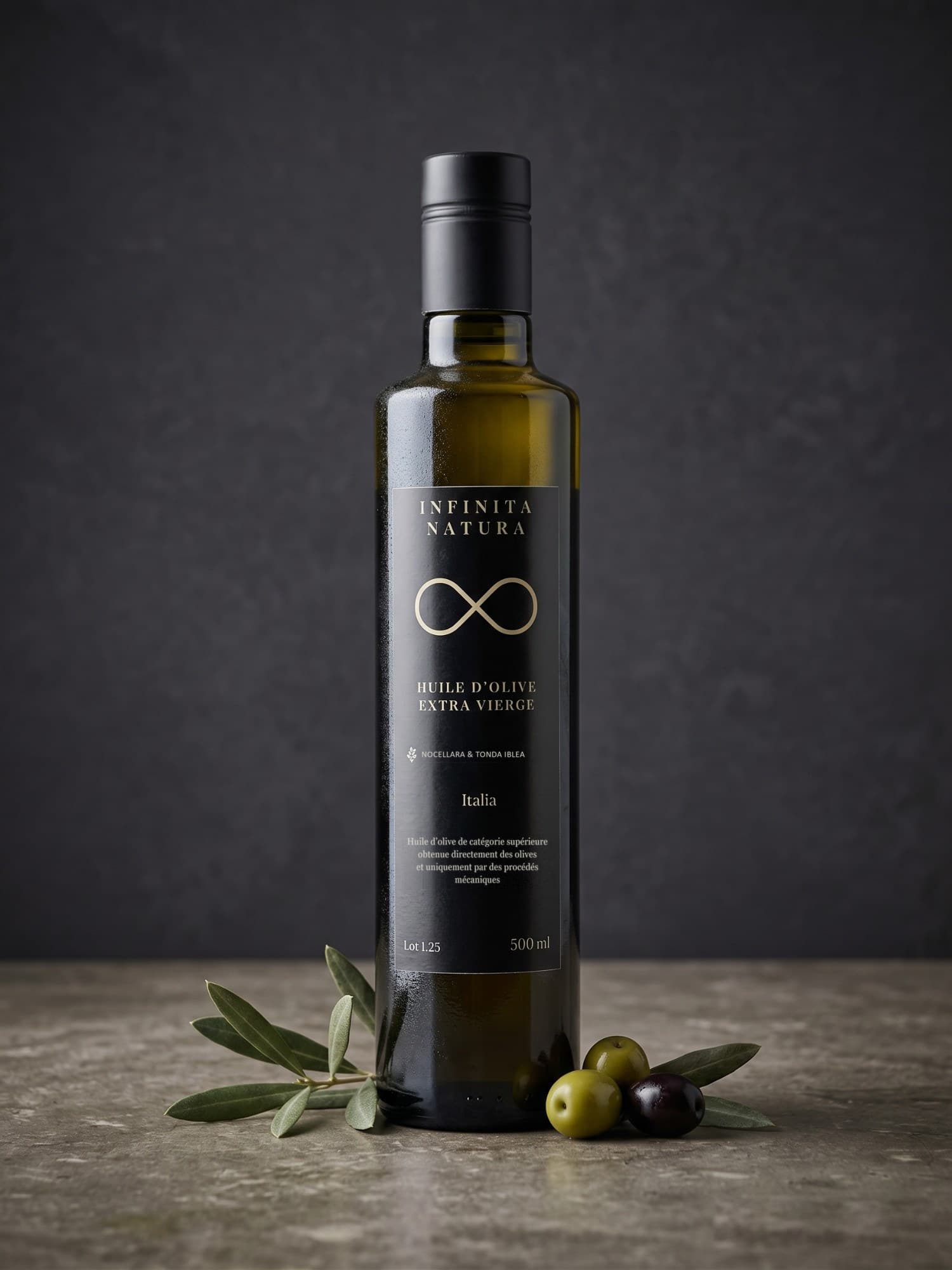
On the shelf, every bottle looks the same. Yet real extra virgin olive oil can be recognised. You just need to know where to look, then taste. Here are the signs that count, and the myths that mislead.
Extra virgin olive oil defined
Extra virgin is not a marketing word. In the European Union, it is a legal grade. It is also the highest grade of olive oil.
To earn it, an oil must meet three conditions. It comes straight from olives, by mechanical means only: crushing, malaxing, separating. No solvents, no refining. Its free acidity does not exceed 0.8%. And it goes before a panel of trained tasters: it must show real fruitiness and no defects at all.
That last point is key. An oil can pass the lab tests and still taste bad. If it does, it is not extra virgin. Taste is part of the definition.
The other grades
- Virgin olive oil: also made mechanically, but slight defects are allowed and acidity can reach 2%.
- Olive oil, with no other word: a blend of refined and virgin oil. Refining removes the defects, and the aromas with them.
- Olive pomace oil: extracted from what is left after pressing, then refined.
If the label does not say "extra virgin", it is not. That is your first filter.
What the label tells you
Once you have found the grade, the label holds more clues. Some are mandatory. Others are optional but useful.
First, the legal statement. In the EU it must read: "superior category olive oil obtained directly from olives and solely by mechanical means". It is often in small print, on the back or under the name.
Next, the origin. For virgin and extra virgin oils sold in the EU, it is mandatory. But it can be very broad. "Blend of olive oils of European Union origin" is a legal statement. It says nothing about where the olives really grew. A country, a region or a named variety tells you much more.
Finally, the harvest date. It is not required. When it is there, it is a good sign: the producer stands by the freshness of the oil. Do not confuse it with the best before date, which is often set much later. To see why timing matters so much, read our piece on the olive harvest.
Be wary of vague words. "Pure", "light" or "mild" have no legal meaning. "First cold pressed" and "cold extracted" are regulated in the EU. They are reserved for oils obtained below 27 °C.
The bottle matters too
Olive oil fears three things: light, heat and air. They oxidise it and strip its aromas. A good bottle protects it.
Choose dark glass, tins or opaque containers. Clear glass leaves the oil exposed, especially under shop lighting. Look at where it is stored, too. A bottle that sat in the sun or near a heat source has already aged.
At home, keep it away from light and from the hob, with the cap tightly closed. Once opened, it is best used within about three months.
Tasting: the real test
The label gives you clues. Your palate decides. An extra virgin olive oil should taste of the fruit it comes from.
Pour a little into a small glass or a spoon. Warm it in your hand for a moment. Smell it. A good oil smells green and fresh: cut grass, tomato leaf, artichoke, almond or green apple, depending on the variety. Tasters call this fruitiness.
Then take a small sip. Bitterness on the tongue and a peppery kick in the throat are normal. They point to a young oil, made from olives picked early. They are not defects.
Defects that give it away
- Rancid: old butter, stale nuts or cardboard. The oil has oxidised.
- Fusty: fermented olives, almost like mud. The fruit waited too long before the mill.
- Musty: damp, mushrooms, a cellar.
- Winey: sour wine or vinegar.
An oil that smells of almost nothing is not necessarily bad, but it has little to offer. An oil that shows one of these defects is not extra virgin, whatever the label says.
Myths to forget
Some tests are everywhere online. They tell you nothing about quality.
- Colour. An oil can be bright green, golden or almost amber. It depends on the variety and the harvest date. Professional panels even taste from blue glasses so colour cannot sway them.
- The fridge test. An oil that solidifies in the cold proves nothing. How it sets depends on its composition, not its purity.
- Price alone. An expensive oil is not always good. But a very cheap extra virgin should make you wonder: picking, pressing quickly and bottling with care all cost money.
- Tasting acidity. The acidity in the rules is a lab measurement. You cannot taste it. A peppery oil is not an acidic oil.
Our oil against these signs
We hold our own oil to these standards. The olives are picked by hand early in the harvest, in October, while still green. They are cold pressed. The oil is then naturally filtered.
The result: green fruitiness, clean bitterness and a peppery finish. On the nose, cut grass and tomato leaf. On the palate, raw artichoke and green almond. To learn more about one of the two olives behind it, read our portrait of Nocellara del Belice.
The rest comes from the place: the limestone soil and dry climate of the Noto terroir. But your palate remains the best judge. Taste our Sicilian extra virgin olive oil and put it to the test.
Frequently asked questions
- How can I tell if olive oil is really extra virgin?
- First check for the words "extra virgin" and the legal statement on the label. Look at the origin and, if given, the harvest date. Then taste it: a real extra virgin has clear fruitiness and no defects, such as rancid or musty notes.
- Does the colour of olive oil show its quality?
- No. Colour depends on the variety and on when the olives were harvested. A very green oil is not necessarily better than a golden one. Professional tasters use blue glasses so they cannot see it.
- Does the fridge test detect fake olive oil?
- No. Oils solidify faster or slower in the cold depending on their composition. The test proves neither purity nor grade.
- Should extra virgin olive oil taste peppery?
- Not always, but often. Pepperiness and bitterness are typical of a young oil made from olives picked early. They are qualities, not defects.
- What is the difference between virgin and extra virgin olive oil?
- Both are made by mechanical means only. Extra virgin has a free acidity of 0.8% or less and no defects when tasted. Virgin allows slight defects and acidity up to 2%.