
The October olive harvest in the Val di Noto
Nets under the trees, olives still green, a mill waiting. Here is how the harvest unfolds for us, near Noto.
· 5 min read
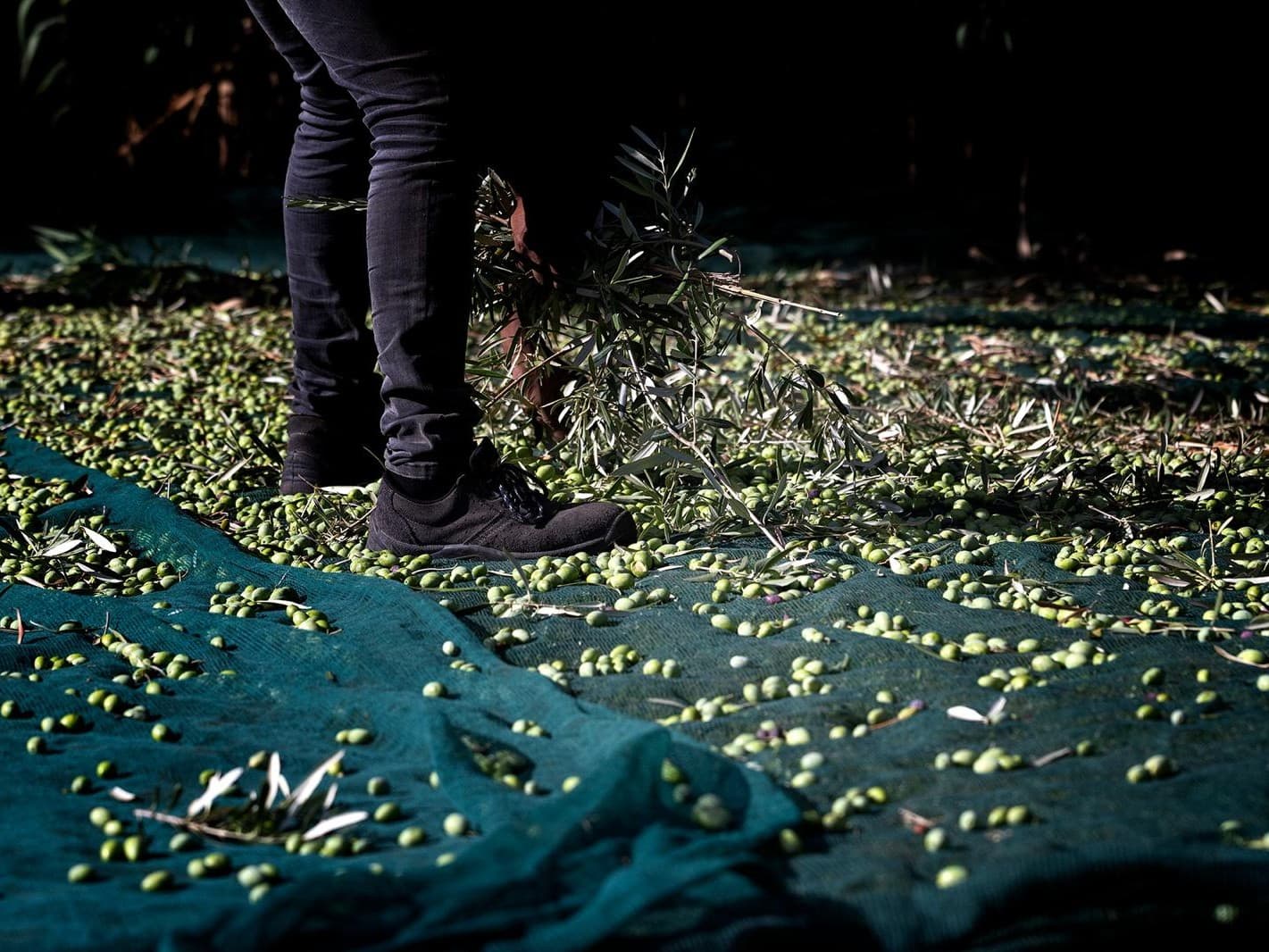
October is a month apart in the Val di Noto. It is the time of the olive harvest in Sicily. In the groves, nets unfold under the trees and crates fill up. Here is how it works, and why every detail matters for the oil.
Why the olive harvest starts in October
In Sicily, the harvest usually runs from October to December. The exact timing depends on the variety, the altitude, the year and, above all, the oil you want to make.
An olive changes fast in autumn. It turns from bright green to purple, then black. As it ripens, it holds more oil but loses its liveliness. The green aromas fade. Bitterness and pepperiness soften.
We make the opposite choice. We pick at the start of the harvest, in October, while the fruit is still green. The olive gives less oil, but a fresher, grassier, more peppery one. That is the profile we want for our Nocellara and Tonda Iblea. To learn more about the variety, read our portrait of Nocellara del Belice.
The Val di Noto in autumn
Our olive trees grow near Noto, on the foothills of the Hyblaean Mountains. They are centuries old. The soil is limestone, sometimes rocky, rich in minerals.
Summer is dry and hot. The rain returns in autumn, after long months without water. Days stay mild and the light is clear. This is when the olive finishes growing and concentrates its aromas.
Autumn is also a fragile season. Heavy rain can delay picking. A strong wind can knock fruit down too early. You have to read the sky as much as the tree. To discover this landscape, visit our page on the Noto terroir.
Picked by hand
Our olives are picked by hand. Machines are faster. Hands respect the fruit.
The gestures are those of many Mediterranean groves. First, large nets are spread at the foot of the tree, so nothing touches the ground. Then the olives are stripped from the branches, by hand or with a small rake. The fruit drops onto the nets. It is gathered, cleared of leaves and twigs, and poured into crates.
These crates usually have open sides. Air flows between the olives. A crushed or piled up olive spoils quickly. It warms up, then starts to ferment.
In Sicily, the harvest was long a matter of family and neighbours. People helped each other from one grove to the next. They shared lunch in the shade of the trees. The work is the same, but picking time still keeps something of that shared season, when everyone looks in the same direction.
Why so much care
A bruised olive starts the oil off with a handicap. Many defects are born before the mill: fruit that fell too early, got damaged or sat too long in a heap. Careful picking already protects the flavour.
From net to mill
Once picked, an olive cannot wait. Every hour counts. The longer it sits, the more it risks oxidising or fermenting, and the oil loses its freshness.
Our olives are cold pressed. At the mill, the steps are the same everywhere:
- The olives are deleafed and washed.
- They are crushed, stones and all, into a paste.
- The paste is slowly malaxed so the oil droplets come together.
- The oil is separated from water and solids, with no solvents and no refining.
Our oil is then naturally filtered. Nothing else is added. A healthy olive, picked at the right time and pressed quickly, does most of the work.
What the harvest gives the flavour
An oil is largely decided in the grove. Variety and terroir set the frame. The harvest sets the style. Three choices weigh more than the rest:
- Timing. A green olive gives a lively, peppery oil. A ripe olive gives a round, mild one.
- Care. Intact fruit keeps its aromas. Bruised fruit brings defects.
- Speed. The faster the olives reach the mill, the fresher the oil.
Our oil bears the mark of these choices. On the nose, cut grass and tomato leaf. On the palate, raw artichoke, green almond and a light bitterness. On the finish, white pepper, with a fine and lasting kick. None of this is added. It all comes from the fruit, and from the moment it was picked.
Every year is still different. The rain, heat and wind of the season leave their mark. That is what makes an oil from a single place interesting: it also tells the story of its year.
The 2026 harvest in figures
This year we harvested 3,915 kg of olives. At the mill, they gave 585 kg of oil.
That is a yield of about 15%: it takes nearly 7 kg of olives to make 1 kg of oil. This is the other side of an early harvest. An olive picked green holds less oil than a ripe one, but the oil it gives is livelier and fresher.
585 kg of oil is about 640 litres, enough to fill nearly 1,280 bottles of 50 cl.
After the harvest, the new oil
Fresh from the mill, the oil is at its peak. In Sicily, it is a moment people wait for. They taste it on a slice of toasted bread, with a pinch of salt and nothing more. We will tell you more about this autumn ritual soon.
A young oil shows green fruitiness, clean bitterness and a peppery finish. Over the months, it rounds out. Bitterness and pepperiness soften. That is why it is worth tasting early, while it still has all its vigour.
Oil from the 2026 harvest is available to pre-order. We ship it from Paris from 14 December 2026, by 18 December at the latest, as soon as it arrives from Sicily. Meanwhile, oil from the 2025 harvest is in stock. Find both on our Sicilian olive oil page.
Frequently asked questions
- When is the olive harvest in Sicily?
- Usually from October to December. The date depends on the variety, the altitude, the year and the style of oil. For a green, peppery oil, olives are picked early in the season.
- Why pick olives while they are still green?
- A green olive gives less oil, but a fresher, grassier one with more bitterness and pepperiness. A ripe olive gives a rounder, milder oil.
- Why press olives so soon after picking?
- A picked olive starts to oxidise and can ferment if it waits. Pressing quickly preserves the aromas and avoids defects. Our olives are cold pressed.
- How are olives harvested by hand?
- Nets are spread under the tree, then the olives are stripped from the branches by hand or with a small rake. The fruit falls onto the nets without touching the ground. It is then sorted and placed in crates.
- How many olives does it take to make a litre of oil?
- This year it took us 3,915 kg of olives to make 585 kg of oil, about 6 kg of olives per litre. The figure varies with the variety, the ripeness of the fruit and the year.